
2026-10-16 ·
Why a Tile Roof Leaks When No Tiles Are Broken
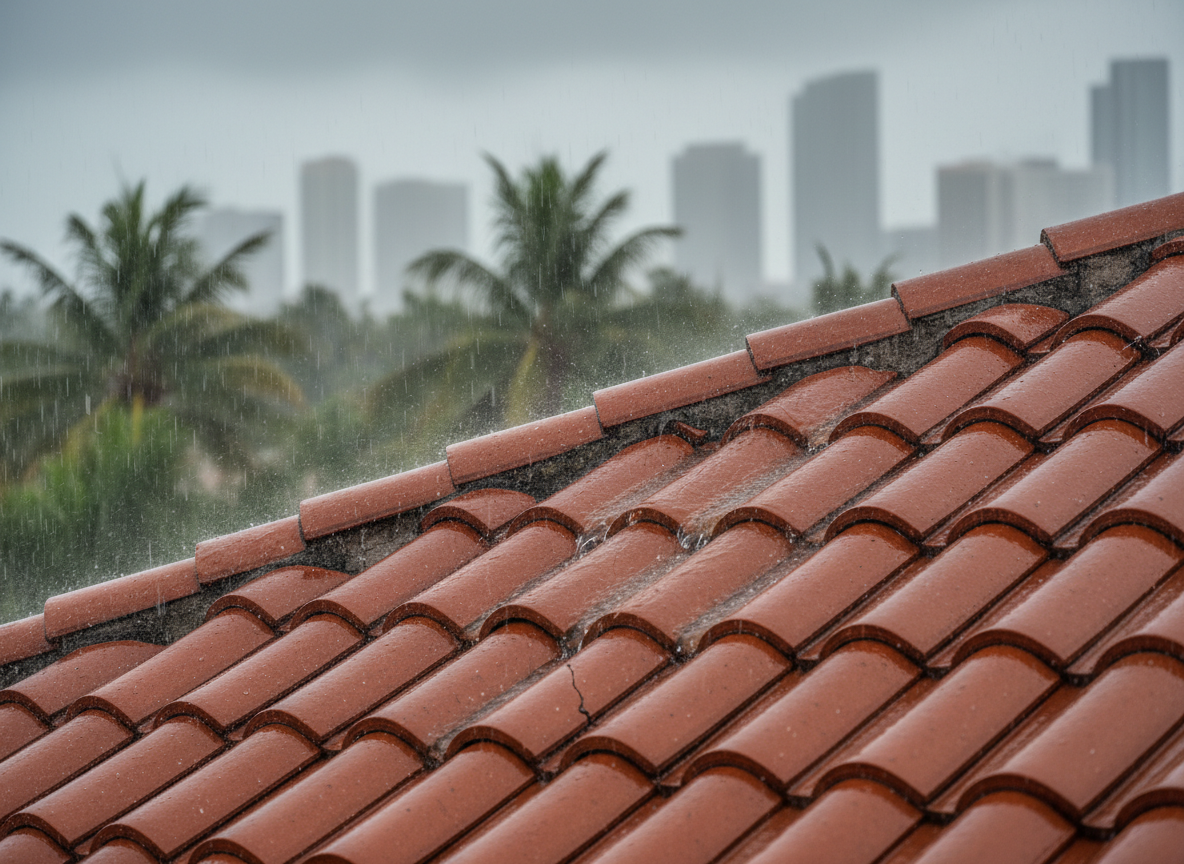
It is one of the most frustrating calls a homeowner can make. Water is coming through a ceiling, someone climbs a ladder, looks at the tile roof and reports that nothing is broken. A tube of sealant goes on a likely-looking crack, the next rain comes, and the stain is back.
The tile was never the problem. To understand why, it helps to know what a tile roof actually is, because the part you can see is not the part that keeps water out of your house.
A Tile Roof Is Two Roofs
Concrete and clay tile is a durable covering. It sheds most of the rain that hits it, takes the sun and protects what lies beneath. But tile is laid in overlapping pieces, and wind-driven rain can be pushed up and under those pieces. That is expected. The roof is designed for it.
The layer that actually stops water is the underlayment, the membrane fastened to the wood deck under the tile. On a tile roof, the underlayment is the real waterproofing. As long as it is intact, water that gets under the tile runs down across it and out at the eaves.
That design has one consequence that catches people out. The tile can look perfect for years after the underlayment beneath it has aged, torn or separated. From the street, from a ladder, even from a drone, a tile roof with a failing underlayment can look like a sound roof.
Where the Water Gets Through
When a tile roof leaks without visible damage, the water is almost always finding its way through one of a few places.
Aged underlayment. Membranes do not last forever. Heat and time make some types brittle. Once the underlayment cracks or splits, water that gets under the tile goes straight through to the deck.
Fastener penetrations. Tiles and battens are fastened through the underlayment. Where a fastener has worked loose or the membrane has torn around it, a small opening becomes a path for water.
Valleys and wall flashing. Where two roof planes meet, or where a roof meets a wall, water concentrates. Flashing and the underlayment at those joints take more water than the open field of the roof, and they fail first.
Penetrations. Vent pipes and other penetrations are sealed with boots or flashing. Those seals sit in direct sun and age faster than the roof around them.
Why the Stain Is in the Wrong Place
There is a second reason tile-roof leaks are hard to find. Water that gets through the underlayment does not always drip straight down. It can run along the deck, a rafter or the top of the ceiling before it finds a place to fall. The stain on your ceiling is often several feet from the opening in the roof.
So sealing the patch of roof directly over the stain often fixes nothing at all. The fix belongs at the point where water gets in, wherever that turns out to be.
How a Proper Diagnosis Works
A careful roofer works from the evidence inward rather than guessing from the outside.
- Start inside. Staining and damp wood in the attic mark the route the water took. Tracing that route uphill narrows down which part of the roof to open.
- Open the roof where the trail leads. With the tiles set aside, it becomes clear whether the membrane, a flashing joint or a tile is to blame.
- Document what is found. Photos of the underlayment and deck, taken with the date, belong in your records whatever you decide next.
- Measure the problem against the roof. If the underlayment has failed in one area, that is a section repair. If it has failed widely, patching will keep chasing leaks, and the conversation turns to how much of the roof needs work.
Our roof repair page walks through the full diagnosis process for leaks and storm damage.
What the Repair Involves
Repairing the underlayment on a tile roof means lifting the tile over the damaged area, setting it aside, repairing or replacing the membrane and flashing, and relaying the tile. Any broken tiles found along the way are replaced with tiles that carry Miami-Dade product approval, because roofing products used in the County need that approval.
The size of the job depends on how much underlayment has failed. That is also where the 25% rule comes in. When the damaged membrane covers something like a quarter of the roof or more, the permit history matters. Florida law lets a roof that went on under the 2007 edition of the state building code, or a newer one, be fixed by section with only that section brought to today's standard. An older roof may face wider code work. The permit record for your address shows which applies.
Tile Roofs and Our Housing Stock
Many South Miami-Dade neighborhoods have older housing. Census estimates show about 83% of homes in Kendale Lakes and about 57% in Cutler Bay were built before 1990, and nearly half of Country Walk's homes went up in the 1990s. Those figures describe houses, not roofs, and we have no source on how many of them carry tile. What they do mean is that many roofs in the area, tile or otherwise, have been through several storm seasons. According to the National Weather Service, Irma in 2017 sent gusts of 80 to 95 mph, Category 1 strength, across nearly the entire county.
When to Think About Replacement Instead
A section repair is the right answer when the failure is local. It stops being the right answer when the underlayment has failed across much of the roof. If a roofer recommends replacing a tile roof, ask to see the evidence: dated photos of the failed underlayment in several areas, and an explanation of why a repair would not hold. Replacing the roof of a site-built house in the County also triggers Miami-Dade's hurricane mitigation requirements, which our roof replacement page explains.
What You Can Do Now
- Note which room the water appears in and whether it happens only in wind-driven rain.
- Take dated pictures of the ceiling stain and of the roof as seen from the yard.
- Do not walk on a tile roof yourself; tiles crack underfoot.
- Ask any roofer to explain how they traced the leak before they price a repair.
If storm damage is involved, remember that Florida gives you twelve months from the day of the damage to notify your insurer of a new or reopened claim.
Talk to Us
If your tile roof is leaking and nobody can find a broken tile, call Roof Repair Miami at (786) 892-8191. The phone is answered 24/7. We are at 22510 SW 172nd Ct, Miami, FL 33170, and we serve the communities listed on our service areas page.