
2026-10-16 ·
Florida's 25% Rule for Miami-Dade Roofs Built Under the 2007 Code
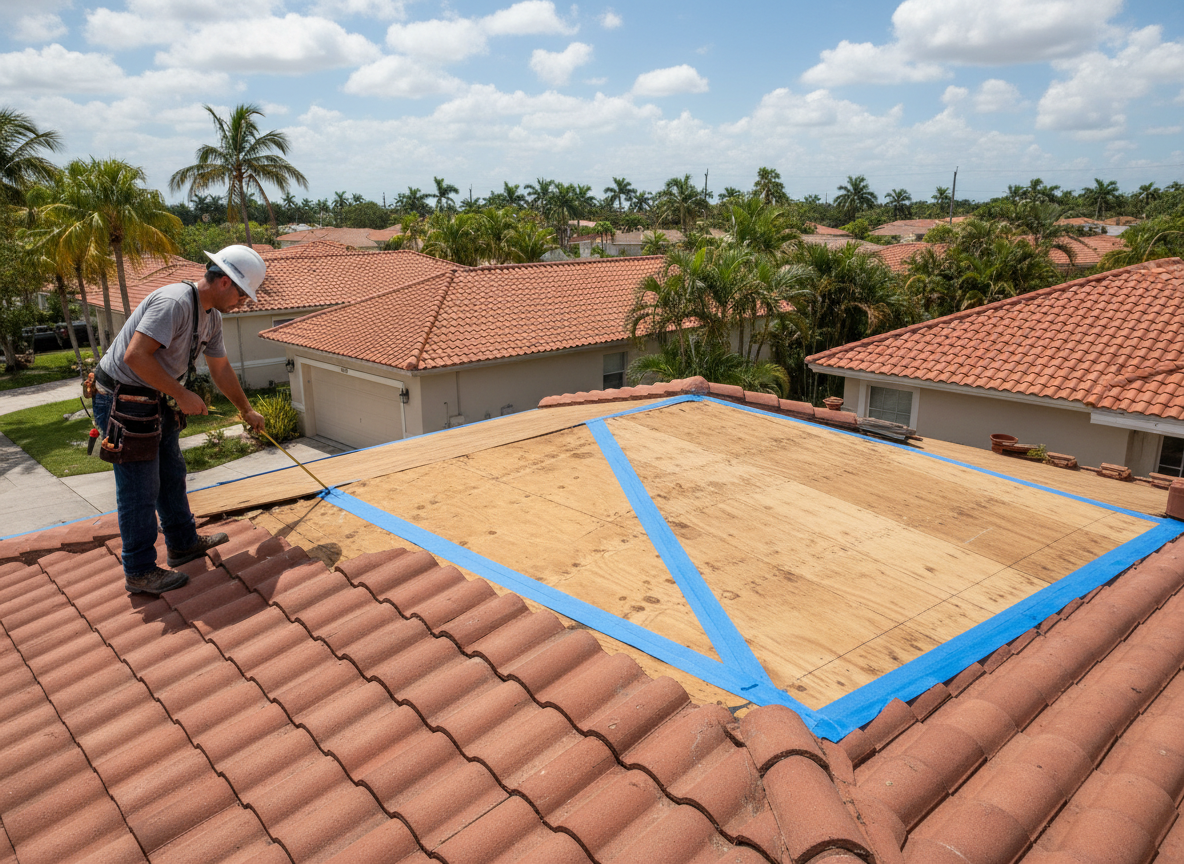
After a hurricane season, one question decides whether a damaged roof in Miami-Dade gets a repair or a replacement more often than any other: does the 25% rule apply? Many homeowners have heard a version of it from a neighbor or an adjuster. Fewer have heard the part that changed, and that part depends on one date in your roof's permit history.
This guide explains what the rule says now, why the 2007 Florida Building Code is the line that matters, how to find out which side of that line your roof is on, and what to do with the answer.
What People Mean by the 25% Rule
For years the version most Florida homeowners heard went like this: if a quarter or more of a roof is repaired or replaced within a year, the whole roof has to be brought up to the current building code. In practice, that pushed a lot of owners with partial storm damage into full replacements, because once the damage crossed a quarter of the roof, a section repair was no longer an option.
That trigger still matters for older roofs. What changed is that Florida law now carves out an exemption for roofs built to a newer standard.
What Florida Law Says Now
Section 553.844(5) of the Florida Statutes says that if an existing roof or roof section was built, repaired or replaced in compliance with the 2007 Florida Building Code or a later edition, and 25% or more of it is repaired, replaced or recovered, only the portion being repaired, replaced or recovered has to meet the current code. The rest of the roof can stay as it is.
Read that sentence carefully, because two details do most of the work.
First, the test is about the roof, not the house. A house built in 1978 can have a roof that was replaced in 2012 under the 2007 code or a later one. That roof qualifies. A house built in 2005 can still have its original roof, permitted under an older edition. That roof does not.
Second, the statute talks about the roof "or roof section." If part of a roof was replaced under the newer code and part was not, the answer can differ by section. That is one reason a roofer should measure damage by section rather than estimate it for the whole roof.
Why the 2007 Code Is the Line
The exemption is tied to the 2007 Florida Building Code, which took effect statewide on March 1, 2009, and anything after it. A roof built to that standard or a later one is treated as already close enough to current requirements that a large repair does not need to drag the rest of the roof up to code. A roof built to an earlier edition does not get that benefit, so a repair crossing the 25% line can still mean wider work.
In Miami-Dade, the edition matters even more than usual, because the County sits in the High-Velocity Hurricane Zone and roofing products used here need County approval. When the rest of a roof is pulled up to current code, that can mean new underlayment methods, new attachment and approved products across a much larger area than the damage itself.
How Housing Age Plays Out Across Our Area
Census figures show why this rule lands so differently from one neighborhood to the next. In Princeton, about 68% of homes were built in 2000 or later and the median home dates from 2008, but the 2007 code only took effect on March 1, 2009, so even there a newer house can carry a roof permitted under the older code. In Palmetto Bay, the median home dates from 1976 and about 75% of homes predate 1990. In The Hammocks, the median build year is 1991, right on the boundary where an original roof would predate the 2007 code and a replacement may or may not, depending on its permit date.
Those numbers describe houses, not roofs. They tell you how likely it is that an original roof qualifies, which is useful. They do not tell you about your roof. For that, you need the permit record.
How to Find Your Roof's Code Edition
The most reliable answer comes from the permit history for your property.
- Find the right office. In unincorporated Miami-Dade, Miami-Dade County issues and keeps roofing permits. Inside a municipality, such as Homestead, Cutler Bay, Florida City or Palmetto Bay, the city, town or village building department does. Our service areas page lists which office covers each community we serve.
- Look for the most recent full roof permit. You want the last time the whole roof, or the section you care about, was replaced, not the last minor repair.
- Note the date. The date on that permit tells you which edition of the Florida Building Code it was reviewed under. A full roof permit dated on or after March 1, 2009, when the 2007 code took effect, is the strongest sign your roof qualifies.
- Check whether the roof was replaced in sections. If one slope or one wing was redone separately, its date may differ from the rest.
If you cannot find a permit, that is information too. Ask the roofer to explain how they will treat the roof under the code before you sign anything.
What to Do With the Answer
If your roof was permitted under the 2007 code or later, storm damage covering a quarter or more of it can usually be handled as a section repair, with only that section brought up to current code. Ask for a written, itemized estimate that measures the damaged area by section and shows the repair scope separately from any work on undamaged parts of the roof. Our roof repair page covers how that repair should be traced and documented.
If your roof predates the 2007 code, a repair that crosses the 25% line may require wider code work. Ask for two prices side by side: the repair, with its code consequences spelled out, and a full replacement. If you do replace, County hurricane mitigation applies to a site-built single-family home: deck sheathing fastened to code and an extra water barrier beneath shingle, wood shake and metal panel coverings are always required. The connections that tie the roof frame to the walls are added only for homes insured, or if uninsured valued, at $300,000 or more, and only where they can be done for about 15% of the reroof cost (F.S. 553.844). Our roof replacement page explains what a full estimate should list.
If you are not sure, do not let anyone guess for you. The date on a permit is a fact that can be checked.
The Insurance Side of Roof Age
The 25% rule is a building-code question, but roof age also matters to your insurer. Under Florida law, for policies issued or renewed on or after July 1, 2022, an insurer cannot decline to write or renew a homeowner policy just because the roof is younger than 15 years. Once a roof reaches 15, the insurer must allow an inspection, and may not refuse coverage solely on age if the inspection shows at least five years of useful life remaining.
Those rules do not decide whether a repair or a replacement is right for you, but they explain why the age of your roof keeps coming up, and why a roof replaced under the 2007 code or later can be easier to keep insured as well as easier to repair.
Questions to Ask Before Any Storm Repair
- Which office issues roofing permits for my address?
- When was the current roof, or this section of it, last fully permitted, and under which code edition?
- How large is the damaged area, measured by section, compared with the whole roof?
- If the repair crosses 25%, what does the code require for the rest of the roof?
- What would a full replacement include, including County mitigation items, and how do the two estimates compare line by line?
Clear answers to those five questions turn the repair-or-replace decision from a judgment call into a comparison of two written scopes.
Talk It Through
If you are looking at storm damage and are not sure where your roof stands, call Roof Repair Miami at (786) 892-8191. The phone is answered 24/7. We work from 22510 SW 172nd Ct, Miami, FL 33170, and we can help you find the permit office for your address and read what your roof's permit history means for the repair.