
2026-10-16 ·
What to Photograph After a Storm, Before the Claim Deadline
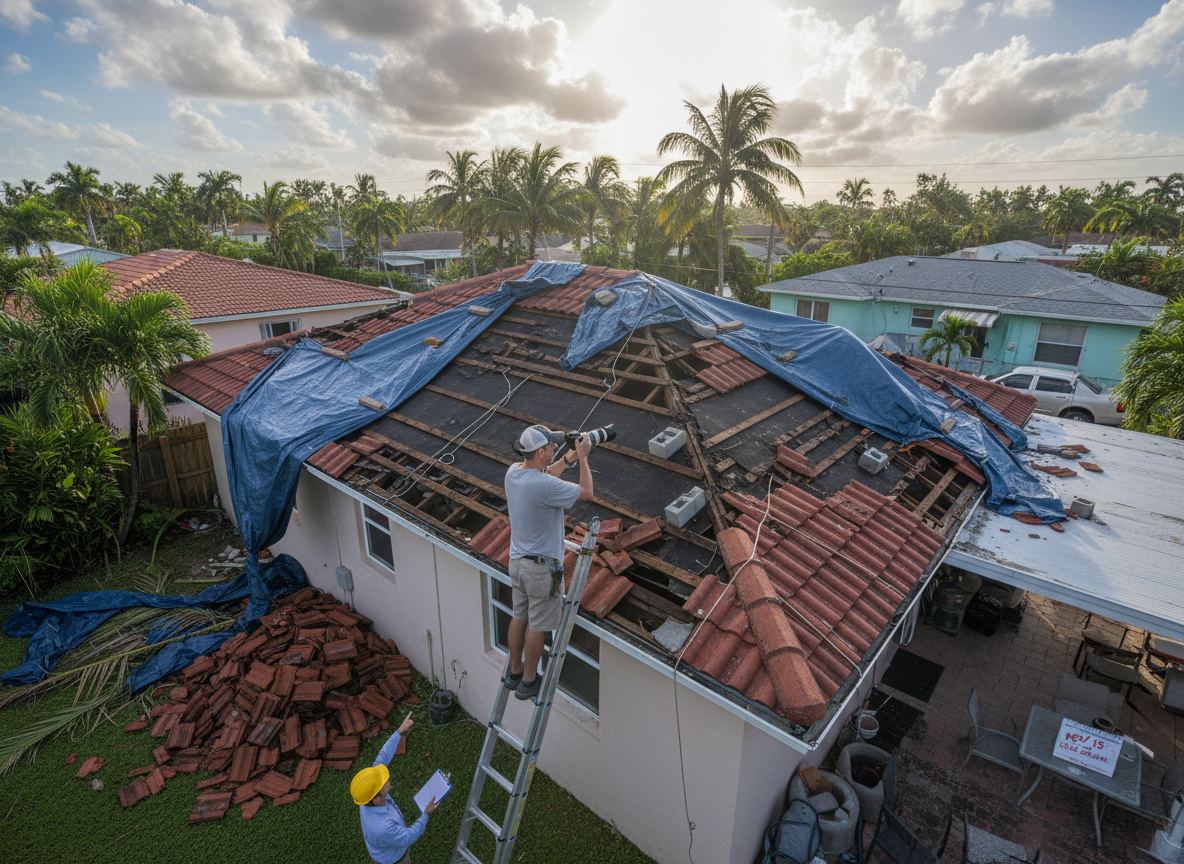
The hours after a storm are the best time to record what happened to your roof. The damage is fresh, nothing has been moved, and the date is easy to prove. Weeks later, it is harder to show what the storm did and what was already there.
This guide is a practical checklist: what to photograph, how to photograph it safely, which deadlines apply in Florida, and which mistakes make the record weaker. It is not legal or insurance advice; questions about your coverage belong with your insurer or a public adjuster you hire.
Safety First
Stay off the roof, wet or dry. Wind can loosen tiles and shingles that look secure, and a roof that took a storm may have weak spots you cannot see. Every photo on this list can be taken from the ground, from a window, or from inside the house.
The Outside Checklist
Walk around the house and photograph each side of the roof from the ground. Include something in the frame that shows which side of the house you are on.
- Every slope of the roof, even the ones that look fine. A full set shows what was and was not damaged.
- Missing or lifted shingles, or exposed dark patches where shingles used to be.
- Cracked, shifted or missing tiles.
- Loose metal trim or panels, and edge metal that has lifted.
- Debris on the roof, such as branches.
- Debris in the yard that came off the roof: shingle pieces, tile fragments, granules near downspouts.
- Gutters and downspouts that have pulled away.
Take wide shots first, then closer shots of each problem.
The Inside Checklist
- Ceiling stains, with something for scale, and a note of which room.
- Active drips, and where you have placed containers.
- Wet insulation or decking in the attic, but only if the attic is safe to enter.
- Damaged belongings near the leak.
Make the Date Provable
A photo's value depends on proving when it was taken. Use a phone camera that records the date in the file, and do not edit or crop the originals. Keep a short written log as well: the storm date, when you took the photos, and what you saw. Back the photos up somewhere other than your phone.
Florida's Deadlines
Florida law puts two clocks on property claims. You have twelve months from the day of the damage to notify your insurer of a new or reopened claim, and eighteen months for a supplemental claim. Miss them and the claim is barred.
Twelve months can feel generous. In practice, damage left alone for a season is harder to tie to one storm, and a second storm can muddy the picture completely. Pictures from the same week as the storm are the strongest evidence you will have.
After the Photos: Keeping Water Out
Once the damage is recorded, the next job is to stop it getting worse. Inside, move furniture and belongings away from any drip and put a container under it. Outside, a damaged roof can be protected with a temporary cover, a tarp fastened over the opening until a permanent repair is made. A tarp is a holding measure, not a repair, but it limits the interior damage that every new rain would add, and it leaves the damaged area in place for an inspector to see. Photograph the roof again once the cover is on, so the record shows both the damage and the protection.
Flyers and Door Hangers After a Storm
Storms bring advertising. Florida law treats certain contractor advertising as prohibited: a door hanger, flyer, business card, email or similar message that encourages you to contact a contractor or public adjuster to make a roof-damage claim, unless it carries specific disclosures in type of a set minimum size. Those disclosures say that you are responsible for any insurance deductible, that knowingly waiving or rebating a deductible is insurance fraud and a third-degree felony, and that intentionally filing a claim with false, incomplete or misleading information is also insurance fraud and a third-degree felony. If a flyer urging you to file a claim does not say those things, treat it with caution.
Know Who Does What
What you should expect from a roofer is about the roof itself: an inspection, a description and photos of the damage, and a priced repair. A roofer should not interpret your policy or tell you what it covers. Under Florida law, a contractor may not advise on coverage or adjust a claim unless licensed as a public adjuster.
Florida law also prohibits contractors from offering a rebate, gift, gift card, cash, a deductible waiver or anything of value in exchange for a roof inspection or for making a claim. Be cautious of anyone who offers to cover your deductible or promises you a roof at no cost. You are responsible for your insurance deductible, and knowingly waiving or rebating a deductible is insurance fraud under Florida law.
Mistakes That Weaken the Record
- Repairing before photographing. Temporary protection to stop water is sensible; take photos before and after.
- Only photographing the damage. Photos of undamaged slopes show the scope.
- Losing the originals. Edited, cropped or forwarded copies can lose the date information.
- Waiting. The longer the wait, the harder it is to tie damage to a specific storm.
When to Call a Roofer
Call once the storm has passed and the photos are taken. A roofer can trace any leak to its entry point, document the damage with dated photos of their own, and give you an itemized estimate you can share with your insurer if you choose. Our roof repair page describes what that inspection and report should include. If the damage is widespread, our roof replacement page explains what a full estimate should list.
Storms Here Are Not Only Direct Hits
South Miami-Dade knows major storms. Andrew came ashore on August 24, 1992 near the Homestead air base as a Category 5 storm. Yet a direct hit is not needed for damage. Irma, in 2017, never struck Miami-Dade head-on, but the National Weather Service says gusts of 80 to 95 mph reached nearly every part of the county, 1,585 homes here were damaged, and residents filed 55,012 insurance claims (weather.gov/mfl/hurricaneirma). In 2005, Hurricane Wilma produced a 92 mph gust at Miami International Airport though its landfall was far to the southwest. A storm that passes nearby can still lift shingles and crack tiles.
Whether you own in Homestead, rent in Florida City or Kendall West, or live anywhere on our service areas page, the checklist is the same.
Talk to Us
After a storm, call Roof Repair Miami at (786) 892-8191. The phone is answered 24/7. We are at 22510 SW 172nd Ct, Miami, FL 33170.